This post contains affiliate links. If you buy through them, Snug Order may earn a small commission at no extra cost to you.
Shoes are the number one cause of a cluttered hallway. In a narrow UK hall you need storage that is shallow, tall, and ideally off the floor altogether. These are the options that actually fit.
Short on time? Our quick picks
- Best overall: Slim tipping shoe cabinet
- Best for renters: Over-door shoe organiser
- Best for families: Narrow shoe storage bench
1. Slim tipping shoe cabinet
Flip-down compartments hold shoes at an angle, so the whole cabinet is only around 17–24 cm deep. Holds a lot of pairs while leaving the walkway clear.
2. Narrow shoe storage bench
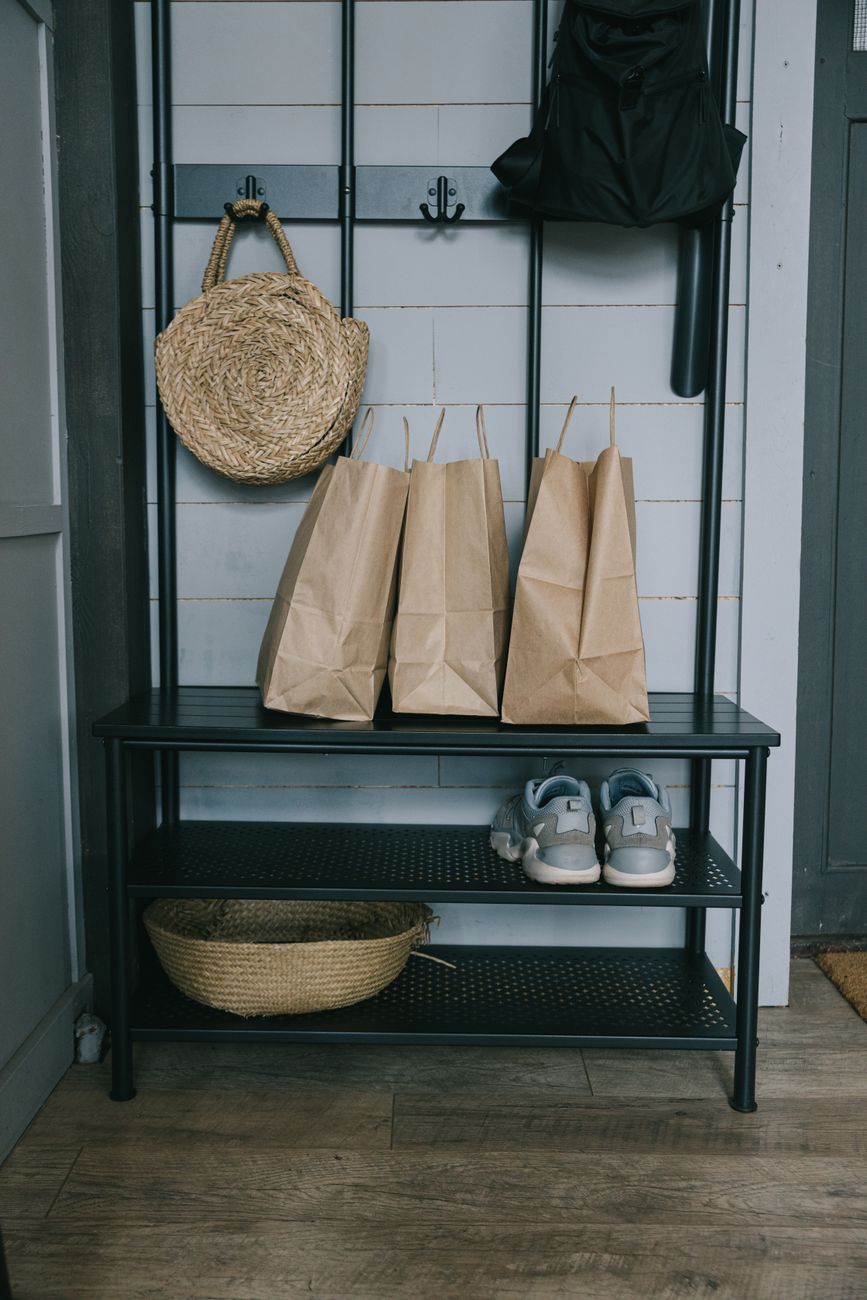
A seat for pulling boots on, with shelves underneath. Look for one under 30 cm deep for a narrow hall.
3. Tall stackable shoe rack
Goes up instead of out. A slim 8–10 tier rack fits in the corner behind the front door.
4. Over-door shoe organiser
Hangs on the under-stairs cupboard door or a bedroom door. Zero floor space and no drilling.
5. Wall-mounted shoe shelves
Floating shelves at skirting height keep everyday trainers off the floor and make cleaning easier.
6. Clear stackable shoe boxes
For shoes you do not wear daily. See-through fronts mean you can find the right pair without opening every box.
How to choose
- Measure your walkway. Keep at least 80–90 cm clear, which usually means nothing deeper than 25 cm on the floor.
- Count your everyday pairs. Only those need to live in the hallway. Everything else can go in boxes elsewhere.
- Renting? Stick to freestanding or over-door options so you do not need to drill.
How much space do shoes need?
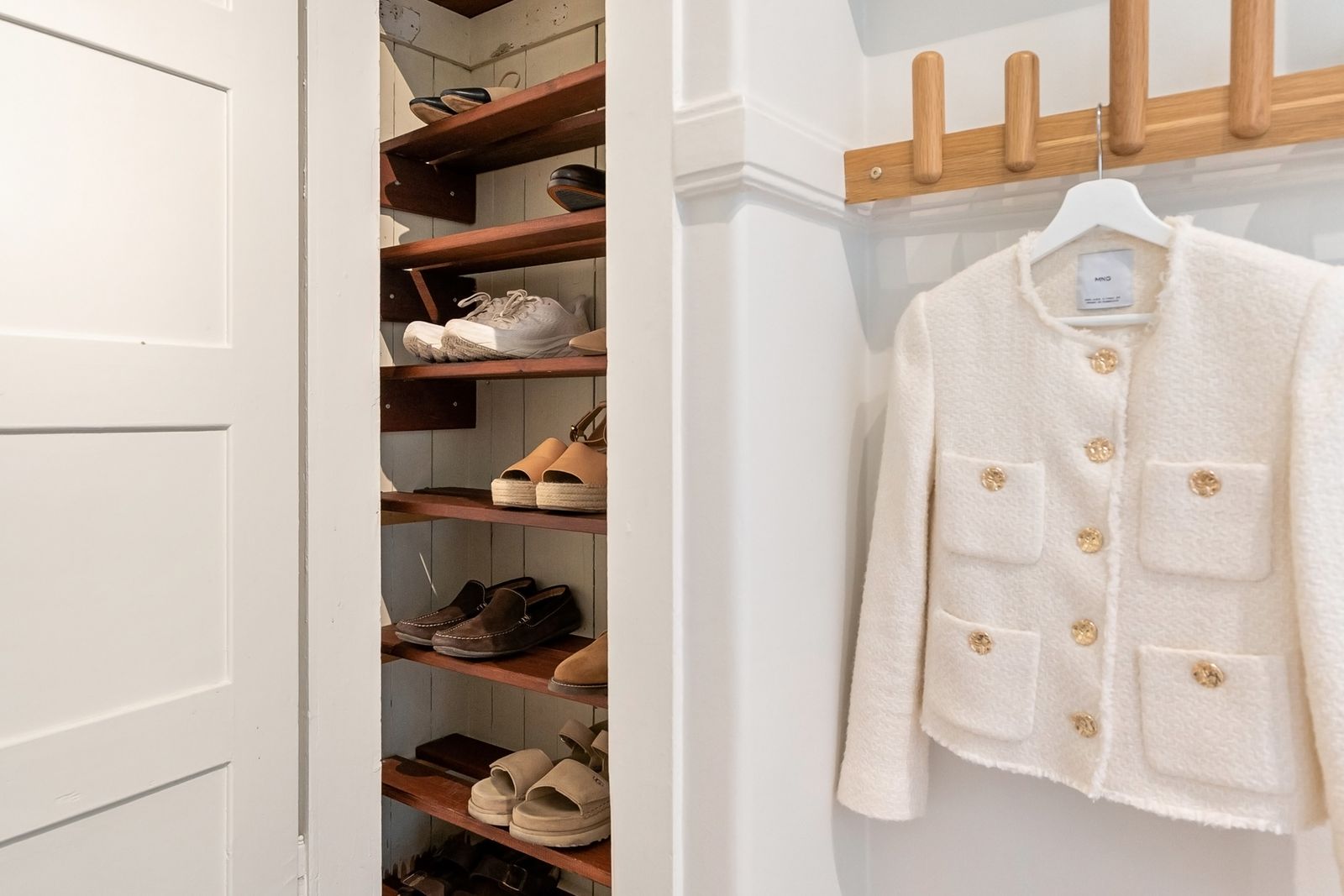
Adult shoes are roughly 25–32 cm long, which is why they stick out of shallow shelves and why flat shoe racks need to be about 30 cm deep. Tipping cabinets get round this by storing each pair at an angle, toe down, in a drawer that is only 17–24 cm deep. The trade-off is height: bulky trainers, high-tops and boots often do not fit the compartments, so check the internal height of each drawer against your biggest everyday pair.
Width matters too. Allow about 20–25 cm of shelf width for each pair of adult shoes, and a little less for children’s.
Work out how many pairs live in the hall
- Count the pairs each person wears in a normal week. That is usually two or three each.
- Those are the only shoes that need hallway space.
- Everything else (occasion shoes, out-of-season boots, sports kit) can go in clear boxes in a wardrobe or under a bed.
Buying storage for the weekly pairs, rather than for every shoe you own, is what keeps a narrow hall clear.
Fixing and safety
Tall, slim cabinets and racks are top-heavy once loaded. Fix them to the wall with the anti-tip kit supplied, using plasterboard fixings if the wall is hollow. If you rent and cannot drill, choose lower, wider pieces that are stable on their own, or an over-door organiser.
Common questions
Do tipping shoe cabinets fit large shoes?
Most take average sizes, but large sizes and chunky soles can be a squeeze. Compare the compartment dimensions in the listing with your longest and tallest pair before buying.
How do I stop shoe storage smelling?
Let shoes air and dry before they go into a closed cabinet, and never shut wet shoes away. Open racks ventilate better than closed cabinets, and a boot tray by the door catches the worst of the wet.
Where do wellies and tall boots go?
On a boot tray, or on a boot rack that holds them upright. They rarely fit inside cabinets, so give them their own spot.
Can over-door organisers damage the door?
The hooks can mark paint over time. A strip of felt or tape under each hook protects the door. Check that the door still closes properly with the hooks in place.
More small-space ideas: 7 storage ideas for narrow UK hallways and wardrobe organisers for tiny flats.
Get our best small-space finds
One short email a month with new storage ideas and the organisers actually worth buying. No spam.
Disclosure: Snug Order is a participant in the Amazon EU Associates Programme. As an Amazon Associate, this site earns from qualifying purchases.


Leave a Reply