This post contains affiliate links. If you buy through them, Snug Order may earn a small commission at no extra cost to you.
In a small home, Christmas can double the toys overnight with nowhere new to put them. Sorting out toy storage now, before the presents arrive, means the living room still feels like a living room in January. These space-saving ideas work in flats, shared bedrooms and homes without a playroom.
Short on time? Our quick picks
- Best overall: Cube storage unit with fabric drawers
- Best for under the bed: Rolling under-bed storage box
- Best for small parts: Stackable clear lidded boxes
1. Cube storage unit with fabric drawers
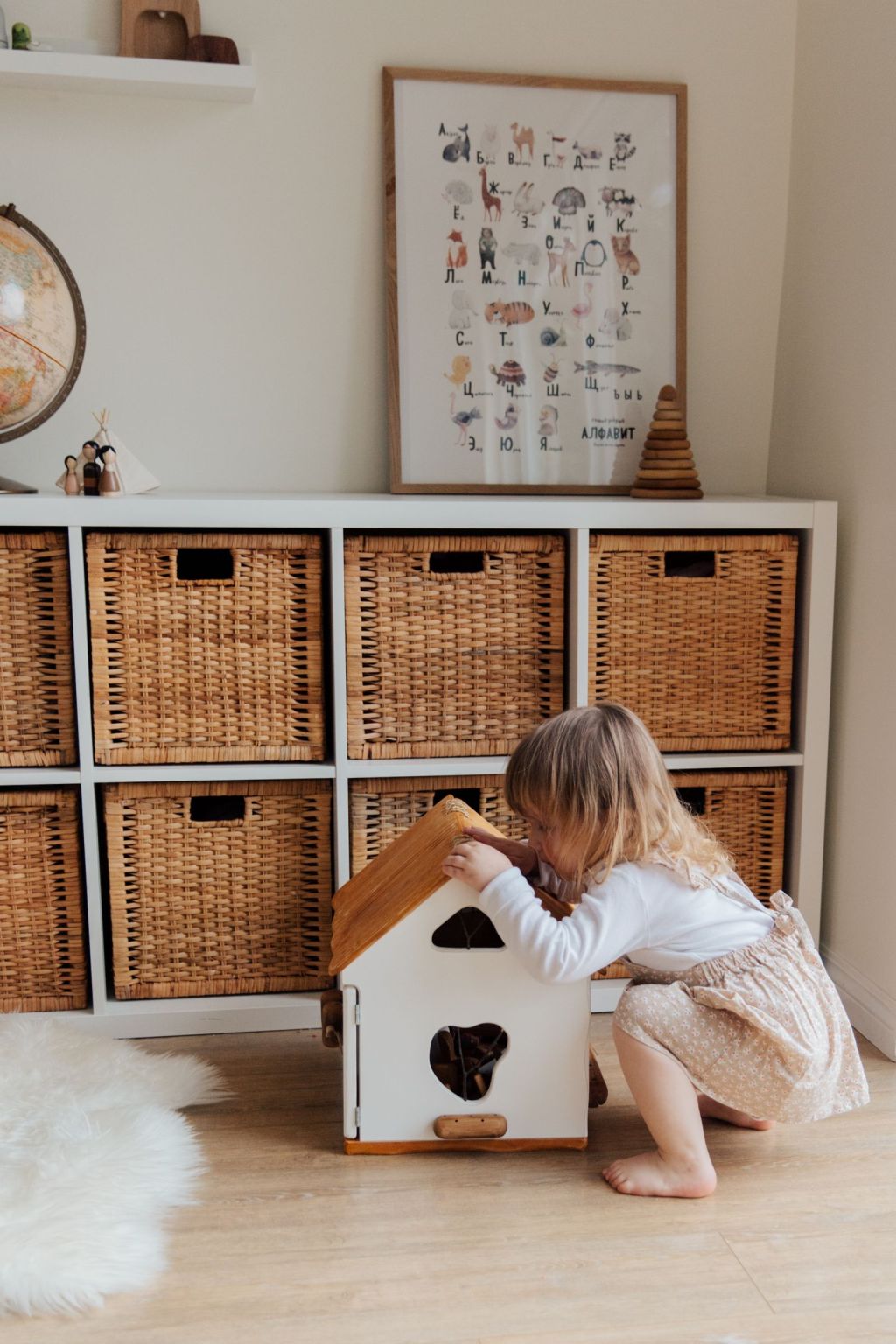
A low cube unit gives every type of toy its own drawer, and the top doubles as a display shelf. Low units are easier for children to tidy themselves, which matters more than the number of cubes.
2. Rolling under-bed storage box
The space under a bed is often the biggest empty spot in a small bedroom. A shallow box on wheels with a lid keeps dust off and slides out easily for bigger toys and games.
3. Storage bench with a safety lid
A bench gives you seating and a toy box in one footprint, which suits a living room corner or a window. Look for one with a lid support or soft-close hinge so it cannot slam shut on fingers.
4. Over-door organiser with clear pockets
Uses the back of a bedroom or cupboard door for small figures, cars, craft bits and dolls’ accessories. Clear pockets mean children can see what is inside without tipping everything out.
5. Soft toy storage net or hammock
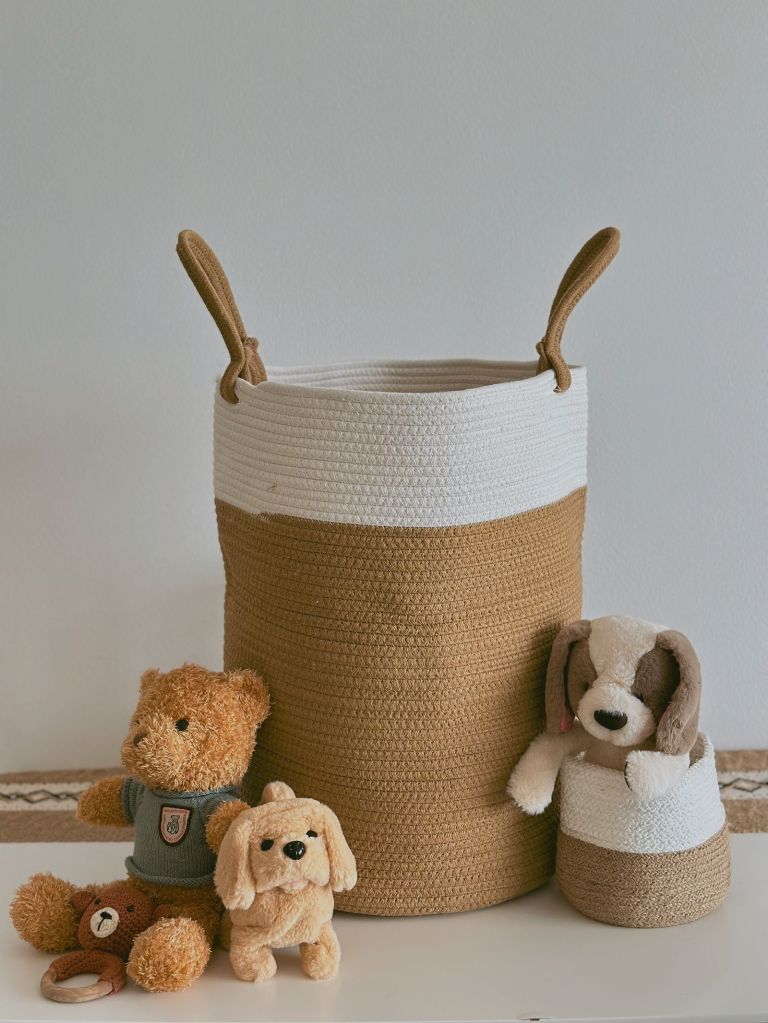
Soft toys take up a surprising amount of shelf space. A corner net lifts them off the floor and the bed, using wall space that would otherwise sit empty.
6. Stackable clear lidded boxes
Ideal for building bricks, puzzles and sets with lots of small pieces. Boxes of the same size stack neatly on a shelf or in a wardrobe, and lids stop pieces spreading across the floor.
7. Play mat that doubles as a storage bag
Lay it flat to play, then pull the drawstring and the whole lot becomes a bag. Tidying up takes seconds, which is handy when the play area is also the living room.
8. Slim front-facing bookcase
Shows book covers rather than spines, so children can pick their own, and it is shallow enough to fit beside a bed or behind a door. Great for the new books that turn up at Christmas.
Before you buy
- Measure the space and the clearance. Check the height under the bed, the depth of the alcove and how far a door or drawer needs to open.
- Check inserts match the unit. Cube units and fabric drawers come in different sizes, so compare the internal cube measurement with the drawer size before ordering both.
- Think about who will tidy. Open bins and low shelves are easier for young children than lids, clips and high cupboards.
How to plan toy storage in a small home
Start by grouping toys by type rather than by room: building sets, arts and crafts, soft toys, books, games and bigger ride-on or role-play toys. Each group then gets one home, and it becomes obvious which group needs more space than you have.
- Everyday toys low down: the things played with daily go in low cubes, baskets and bins children can reach.
- Small parts in lidded boxes: keep sets with tiny pieces higher up or in a separate box, especially if there is a baby or toddler in the house.
- Bulky and seasonal toys out of sight: under the bed, at the top of a wardrobe or in a rolling box that can be swapped in and out.
Make room before Christmas
A quick sort before the presents arrive is easier than a big one on Boxing Day. Set aside toys that are outgrown, broken or missing pieces, and pass on what is still in good condition to friends, a local charity shop or a toy bank.
Toy rotation also helps in a small space. Keep around a third of the toys out and pack the rest into a labelled box, then swap them every few weeks. Older toys feel new again, and there is less to tidy each day.
On safety, RoSPA and other UK safety organisations advise fixing tall or top-heavy furniture to the wall so it cannot tip if a child climbs it, so use the anti-tip fixing that comes with a unit, or buy a kit if it does not. A common mistake is choosing a tall bookcase to save floor space and leaving it unfixed. Check the age warnings on toys too: items marked as unsuitable for under-3s often contain small parts.
Common questions
Where do you put toys in a small flat with no playroom?
Pick one corner of the living room for a small daily selection and keep everything else in the bedroom, under beds and in wardrobes. Furniture that hides toys, such as a storage bench or a cube unit with drawers, makes the corner look tidy in the evening.
Are toy boxes with lids safe?
They can be, if the lid is designed not to slam. Look for a lid support or soft-close hinge, avoid boxes that lock, and choose one with ventilation gaps. For very young children, open baskets are simpler.
How many toys should be out at once?
There is no set number, and it depends on the child and the space. Many parents find that fewer toys on show leads to longer, calmer play and much quicker tidying, which is why rotation works well.
How do I store building bricks without them everywhere?
Use shallow lidded boxes rather than one deep tub, so pieces are easier to find. A play mat that closes into a bag also catches stray bricks during play.
More small-space ideas: under-bed storage boxes for small UK bedrooms and Christmas gifts for people who love organising.
Get our best small-space finds
One short email a month with new storage ideas and the organisers actually worth buying. No spam.
Disclosure: Snug Order is a participant in the Amazon EU Associates Programme. As an Amazon Associate, this site earns from qualifying purchases.


Leave a Reply