This post contains affiliate links. If you buy through them, Snug Order may earn a small commission at no extra cost to you.
The typical UK hallway is barely a metre wide, and it’s where shoes, coats, bags, keys and post all land the second you walk in. The trick is going slim and going up.
Short on time? Our quick picks
- Best overall: Slim tipping shoe cabinet
- Best for renters: Heavy-duty adhesive wall hooks
- Best for coats and bags: Wall-mounted coat hooks with shelf
1. Slim tipping shoe cabinet
Only around 17–24 cm deep, with flip-down compartments that hold shoes at an angle. The best-selling fix for shoe piles by the door.
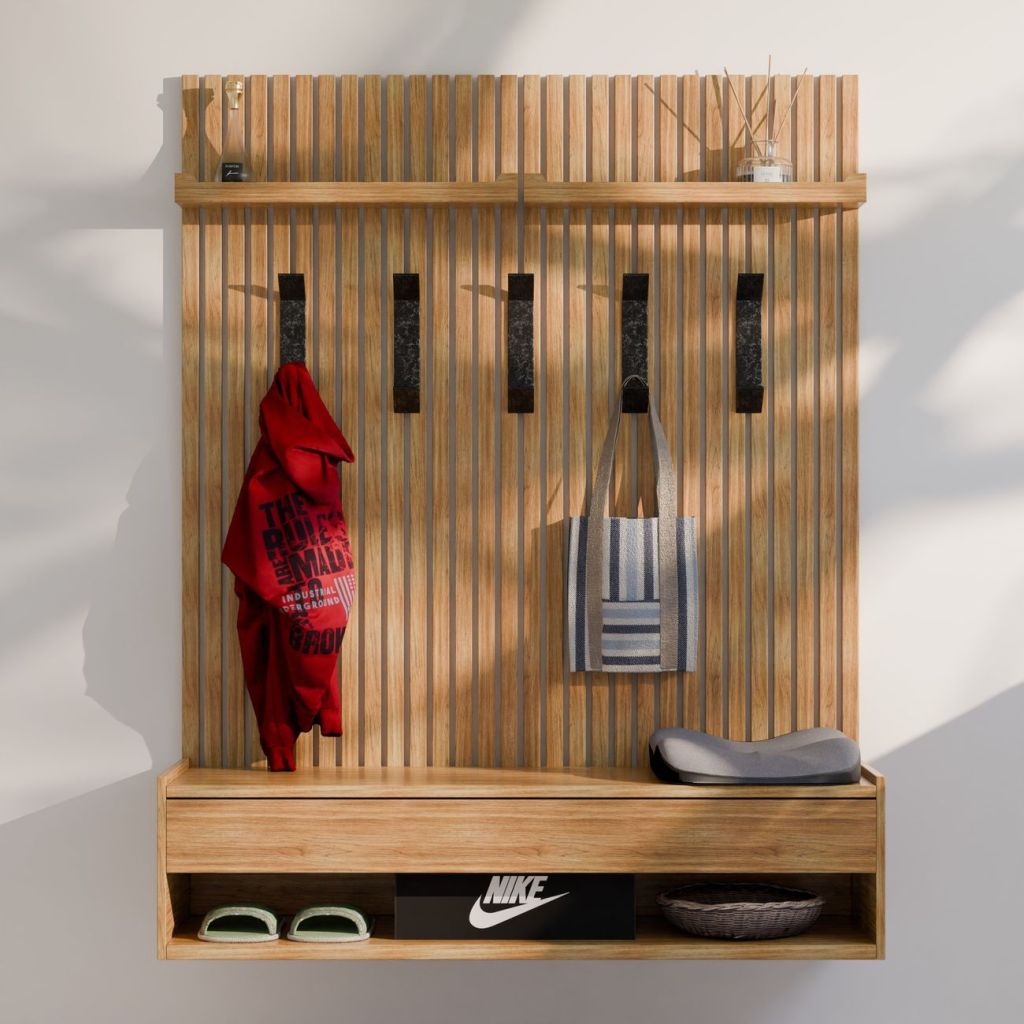
2. Wall-mounted coat hooks with shelf
Hooks below for coats and bags, a shelf above for hats and gloves — all off the floor.
3. Shoe storage bench
Somewhere to sit and pull your boots on, with shoe shelves underneath. Look for one under 30 cm deep for a narrow hall.
4. Key holder and post organiser
A small wall unit with key hooks and a letter slot means keys never go missing and post doesn’t pile up on the stairs.
5. Over-door hanging shoe organiser
Uses the back of the under-stairs cupboard or a bedroom door for trainers and flats. Zero floor space, no drilling.
6. Slim console table with drawer
A narrow table (around 20–25 cm deep) gives a landing spot for keys and a drawer for chargers and dog leads.
7. Adhesive wall hooks (renter-friendly)
Can’t drill? Strong adhesive hooks hold bags, umbrellas and lanyards and peel off cleanly when you move out.
Rule of thumb for narrow halls
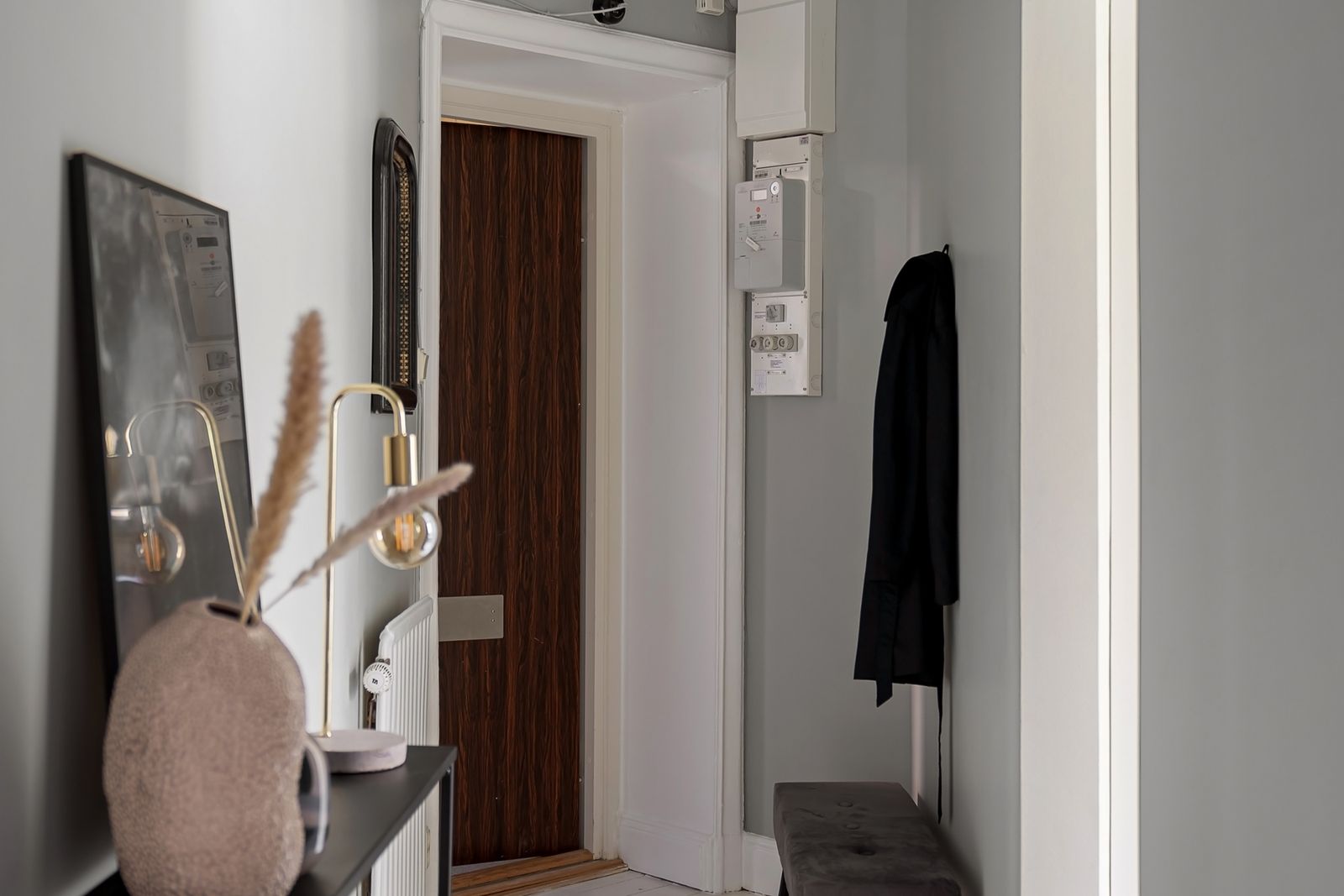
Keep at least 80–90 cm of clear walkway. That usually means nothing on the floor deeper than 25 cm — everything else goes on the wall or behind a door.
How to plan a narrow hallway
- Measure the narrowest point. Include radiators, door frames and the swing of the front door.
- Mark it out. Lay masking tape on the floor to show the depth of anything you plan to add, then walk past it carrying a bag.
- Pick one wall. Storage down one side only keeps the route clear and makes the hall feel wider.
- Go up. Hooks, shelves and tall cabinets use wall height that would otherwise be wasted.
Fixing things to the wall
Many hallway walls are plasterboard, which will not hold a loaded coat rack on ordinary wall plugs. Use fixings made for plasterboard, or screw into the timber studs behind it. Before drilling anywhere, check for pipes and cables, which often run straight up and down from sockets and switches. Secure tall, slim cabinets to the wall with the anti-tip strap or bracket they come with, especially in a home with children.
If you rent, ask your landlord before drilling. Many will agree to a coat rack if you offer to fill the holes when you leave. If not, over-door hooks, adhesive hooks and freestanding furniture cover most of what a hallway needs.
Common questions
How deep can hallway furniture be?
In a hall about a metre wide, keep floor-standing pieces to roughly 25 cm or less so there is still 80–90 cm to walk through. Shelves fixed above head height can be a little deeper.
How much weight do adhesive hooks hold?
It varies a lot between products, so check the packaging. They work best on smooth painted or tiled surfaces and need time to bond before you hang anything. A heavy winter coat is better on a screwed-in hook or an over-door rack.
Where should keys and post go?
Right by the door, at hand height, in one fixed spot. A small wall organiser with hooks and a letter slot works because it removes the decision: keys on the hook, post in the slot, every time.
What makes a narrow hallway look bigger?
A clear floor, light colours and a mirror. Getting shoes and bags off the floor makes more difference than any paint colour.
More small-space ideas: wardrobe organisers for tiny flats and small bathroom storage ideas.
Get our best small-space finds
One short email a month with new storage ideas and the organisers actually worth buying. No spam.
Disclosure: Snug Order is a participant in the Amazon EU Associates Programme. As an Amazon Associate, this site earns from qualifying purchases.


Leave a Reply